
Walk among the innovators and icons who shaped modern entertainment
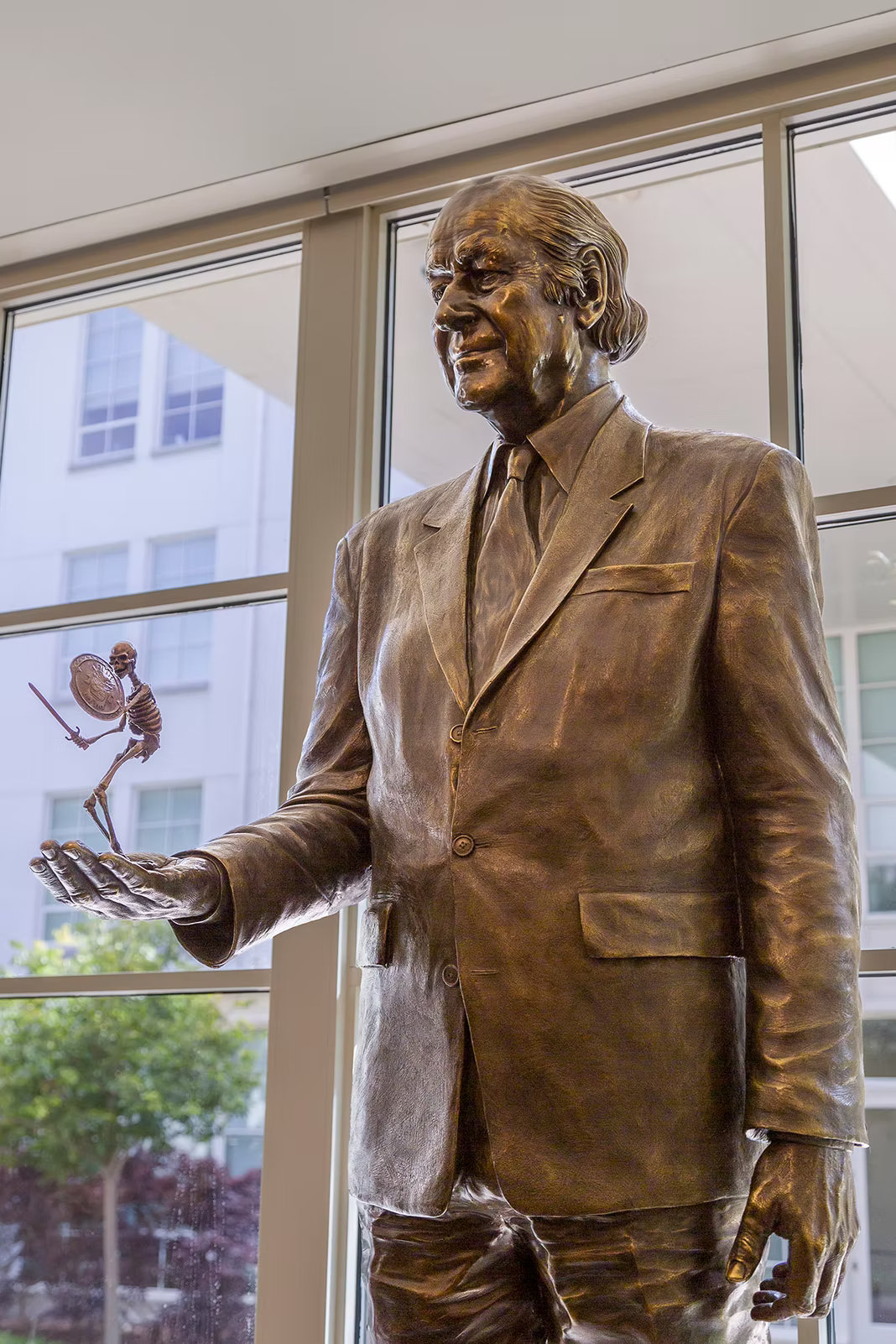
Ray Harryhausen
Ray Harryhausen (1920 – 2013) was an American-British stop-motion animator, filmmaker, and visual effects artist whose work realized the potential of fantasy and science fiction cinema. Inspired by King Kong (1933), he developed his own innovative style of animation he called ``Dynamation,`` that expertly blended miniature creatures with live-action footage. Harryhausen brought mythological beasts, dinosaurs, and otherworldly monsters to life with realism that captivated audiences for decades. His films include Jason and the Argonauts (1963), The 7th Voyage of Sinbad (1958), and Clash of the Titans (1981). They became landmarks in visual storytelling that influenced generations of filmmakers such as George Lucas, Tim Burton, and Guillermo del Toro. Beyond his technical genius, Harryhausen is remembered for his boundless imagination and ability to make the impossible feel real and tangible on screen.
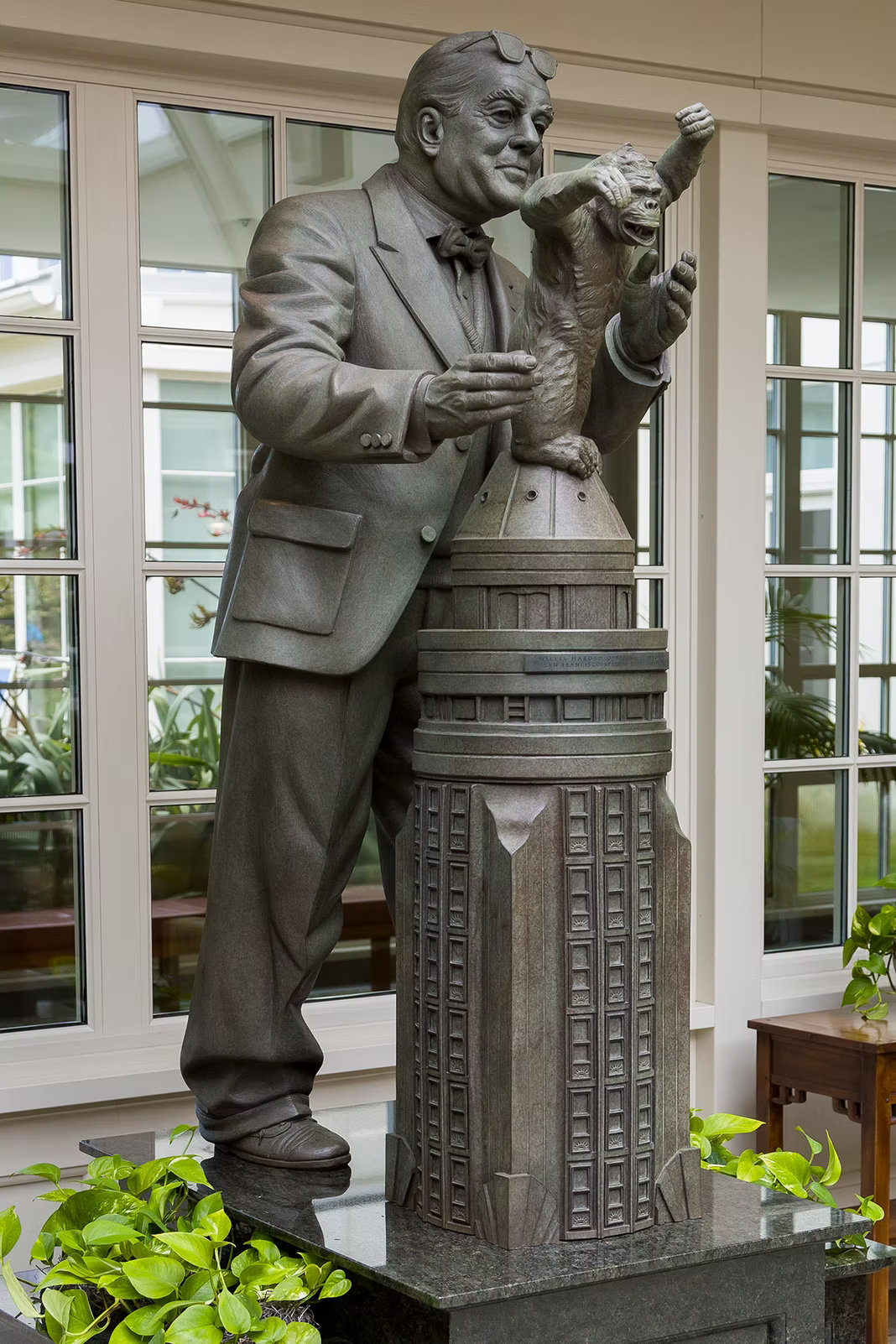
Willis O'Brien
Willis O’Brien (1886 – 1962) was a groundbreaking American stop-motion animator and special effects artist whose innovative techniques transformed early cinema. Born in Oakland, California, O’Brien began his career as a sculptor and cartoonist before trying his hand at stop-motion in 1915. His precision with articulated models and meticulous frame-by-frame animation brought fantastical creatures to life. His work on films like The Lost World (1925) and King Kong (1933) set new visual standards and inspired generations of filmmakers. He later won an Academy Award for Best Visual Effects for Mighty Joe Young (1949), further cementing his legacy. O’Brien’s monsters were not just technical marvels—they were imbued with personality and emotion, helping audiences believe in the impossible on screen. His artistry directly influenced protégés like Ray Harryhausen and laid the foundation for modern visual effects, making him one of the true pioneers of cinema.
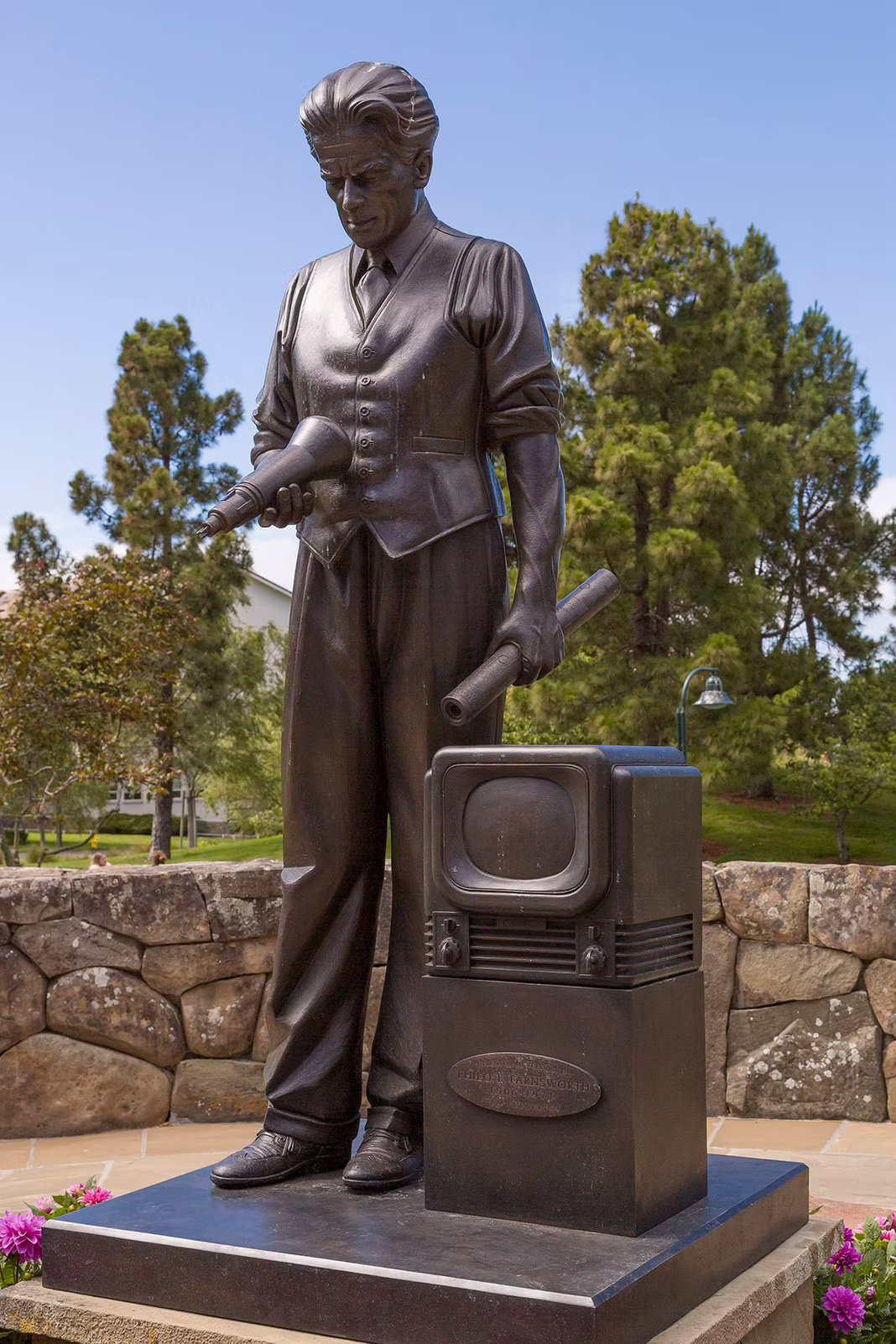
Philo T. Farnsworth
Philo Taylor Farnsworth (1906 – 1971) was an American inventor and television pioneer whose groundbreaking work laid the foundation for modern electronic television. Born in a log cabin in Utah, Farnsworth displayed remarkable ingenuity from a young age, sketching his first ideas for an electronic TV system while still a teenager. In 1927, he successfully transmitted the first electronic television image using a device he invented called the image dissector. Unlike earlier mechanical systems, Farnsworth’s technology used electronic scanning to produce clearer, faster images—ushering in a new era of broadcasting. Despite fierce legal battles with corporate giants like RCA, he was recognized as the true inventor of electronic television. Throughout his life, Farnsworth held over 300 patents and contributed to advancements in radar, nuclear fusion, and other fields. Though he died before seeing the full impact of his work, his vision forever changed global communication and entertainment.
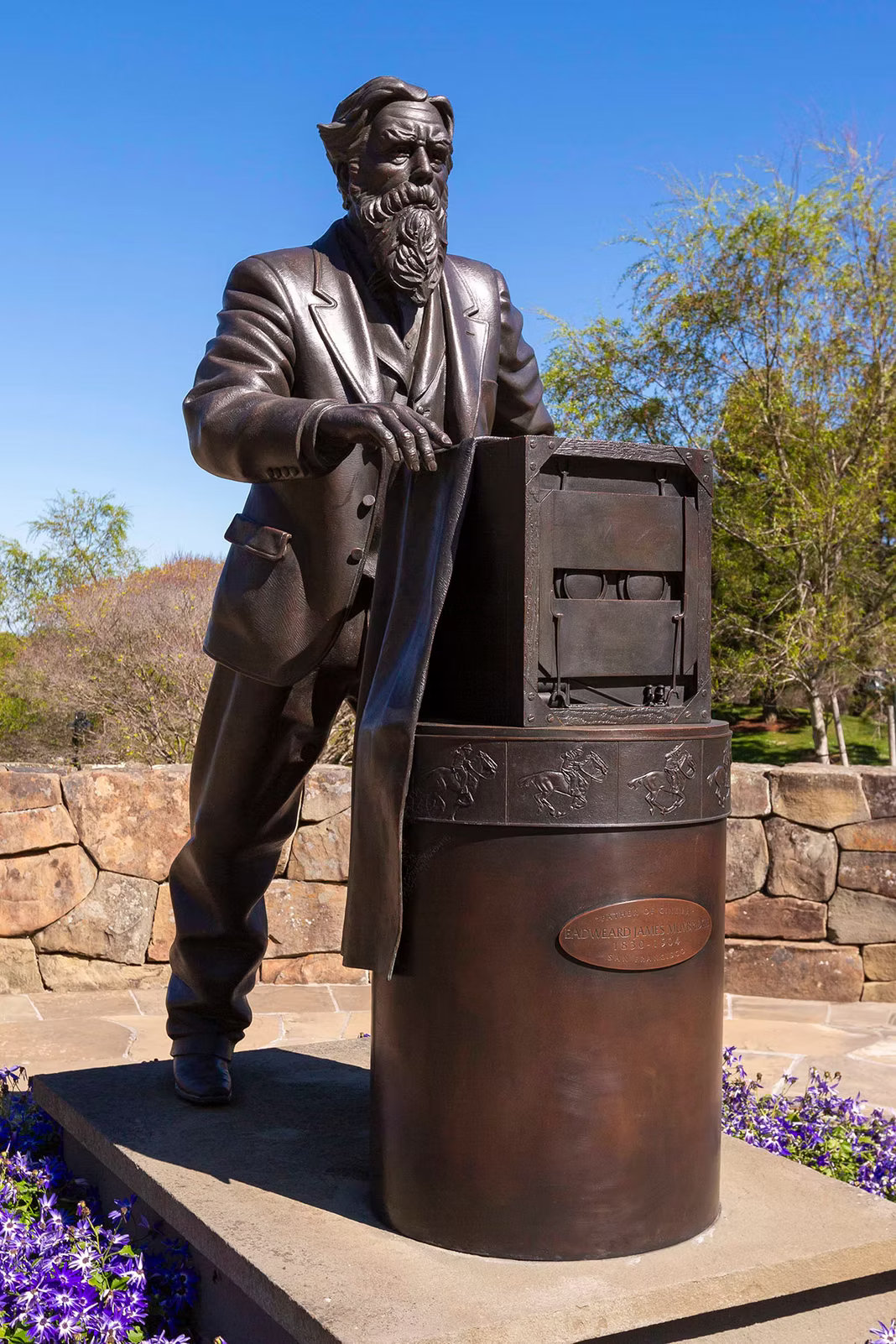
Eadweard Muybridge
Eadweard Muybridge (1830–1904) was an English photographer and pioneering figure in the development of motion pictures. Best known for his groundbreaking photographic studies of movement, Muybridge revolutionized both art and science in the late 19th century. In 1878, he famously used a series of cameras to capture sequential images of a galloping horse, proving for the first time that all four of the horse’s hooves leave the ground simultaneously. This experiment, commissioned by California governor Leland Stanford, laid the foundation for motion-picture technology by demonstrating how still images could be arranged to simulate movement. Muybridge later developed the “zoopraxiscope,” an early device that projected his sequential photographs, effectively creating one of the first motion pictures. His innovative techniques influenced filmmakers, scientists, and artists alike, making him a key figure in the evolution of cinema and visual storytelling.
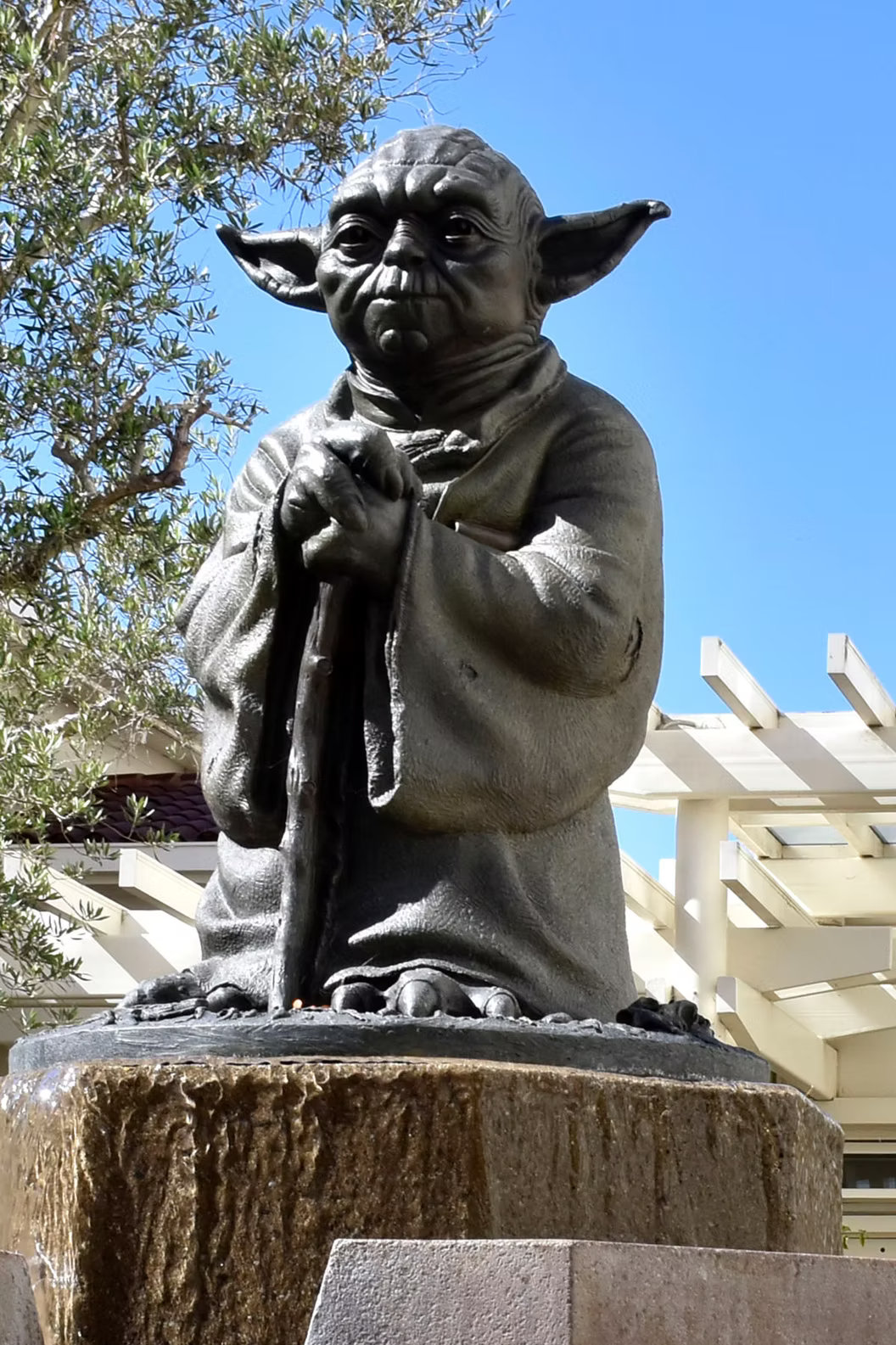
Jedi Master Yoda
Located at building B, sculpted in bronze by artist Lawrence Noble, the statue has a rich, slightly weathered patina that brings out the fine details of Yoda’s face, ears, hands, and robes. The texture of the bronze captures the character’s age and wisdom; you can see the subtle creases of his robe and the soft, organic wrinkles of his face. Yoda stands in a dignified, slightly stooped stance with his small hands clasped atop his wooden cane. Its placement on a raised circular stone pedestal in the center of the fountain elevates it physically and symbolically.
Darth Vader
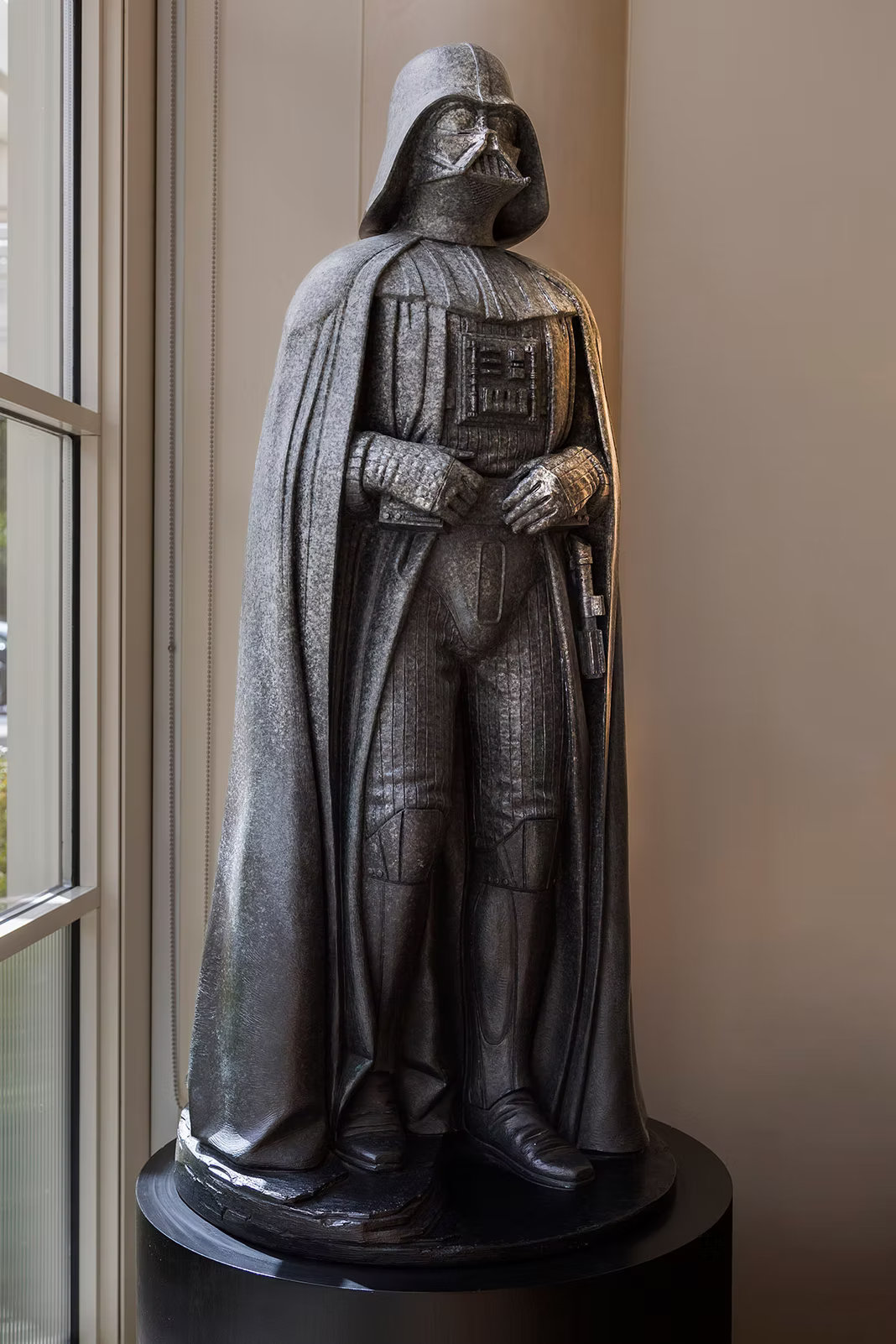
Located in the lobby of Building C, sculpted in bronze by artist Lawrence Noble, Darth Vader is modeled after his appearance in The Empire Strikes Back. Vader is portrayed in a commanding and formal stance, showing Vader with hands resting on his belt and lightsaber at his side. The statue is imposing. Noble has said he envisioned the statue as though it might stand on Coruscant, city of power, a tribute to a figure like Vader giving the statue a contextual aspiration: not merely decorative, but symbolic of power, authority, perhaps omnipresence.
Lawrence Noble, Sculptor
Lawrence Alan Noble is an artist and sculptor from Tampa, Florida. His early work includes designing motion picture advertising campaigns for Time After Time, Flash Gordon, and Star Wars: Episode V - The Empire Strikes Back (10th Anniversary Poster). In 1997, he sculpted the prestigious ``Daytona 500`` trophy. His first bronze sculpture, a lifesize equestrian monument to Civil War General Philip H. Sheridan, was unveiled in Chicago in 1990. Noble was awarded the Henry Hering Memorial Medal for Art and Architecture in 2014 for his creation of sculptures in One Letterman’s park – including the legendary Yoda fountain and life-size statues of Eadweard Muybridge, Willis O'Brien and Philo T. Farnsworth. Noble also sculpted the Yoda and Indiana Jones centerpiece for George Lucas’ donation of Imagination Park to the town of San Anselmo, California (2013).
Lawrence Halprin, Park Designer
Lawrence Halprin (1916 – 2009) was an influential American landscape architect, urban designer, teacher, and social visionary whose innovative work reshaped public spaces in the second half of the 20th century. Beginning his career in the San Francisco Bay Area in 1949, Halprin became known for blending natural forms with modern design, and creating spaces that encouraged social interaction and community engagement. His designs often emphasized movement and the sensory experience of space—an approach shaped by his collaboration with his wife, choreographer Anna Halprin. Among his most celebrated projects are San Francisco’s Ghirardelli Square, Seattle’s Freeway Park, and the Franklin Delano Roosevelt Memorial in Washington, D.C. Halprin championed participatory design processes, inviting communities to shape their environments, and his work helped redefine how cities integrate nature, art, and human activity. His legacy endures in the many vibrant, human-centered public spaces he created across the United States – including the 17-acre public park at One Letterman.
